The Home journal
Seller Guide · Under Contract · Salt Lake City
Under Contract
What Happens on Closing Day When I'm Selling?
2026-10-22 · Delia Bayna, REALTOR® · eXp Realty, LLC | Luxury · 6 min read
The Short Answer
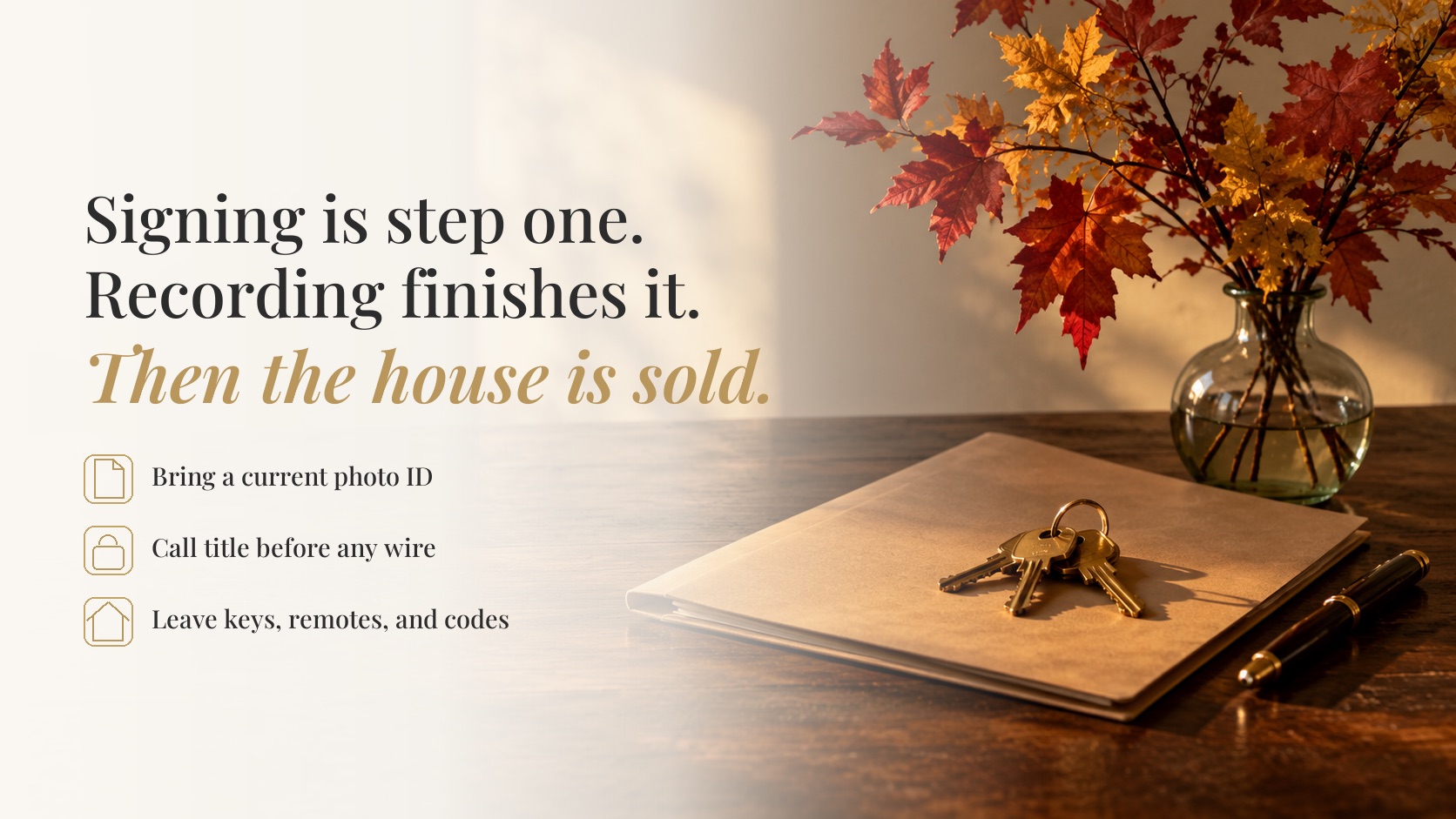
You sign the final papers with the title company, often at a different time than the buyer. Then the buyer's loan money arrives and the deed is recorded with the county, and once it records, the house is sold and the title company sends you your money.
I am Delia Bayna, a REALTOR with eXp Realty in Salt Lake City, Utah. Closing day sounds bigger than it is. Here is what actually happens, step by step, so nothing on the day catches you off guard.
In Utah, Signing and Closing Are Two Steps
Utah splits the end of a sale into two parts, and the REPC uses its own words for them. Settlement is when you and the buyer sign the final documents and deliver any money you each owe. Closing comes after that. It happens once settlement is done, the buyer's loan money has been delivered, and the deed has been recorded with the county recorder. Here, that is the Salt Lake County Recorder's office.
So you can sign in the morning and still not be "closed" until later, after the loan funds and the deed records. That gap is normal. Your title company tracks it and will tell you when the sale has recorded.
What You Sign
Sellers often sign at the title company's office. Many title companies can also arrange a notary to meet you somewhere else, which helps if getting downtown is hard. Ask your title company what they offer.
Bring a current photo ID, like a driver's license or passport. If the home is in a trust, or someone is signing with a power of attorney, the title company needs that paperwork well before signing day.
The main things you sign:
- The deed, which transfers the home to the buyer.
- The settlement statement, which lists every number in the sale: the price, your loan payoff, each cost, any credits, and the prorated property taxes.
- A few forms the title company needs to finish the sale and send your money.
Read the settlement statement before you sign. Compare it to the estimate your agent gave you before you listed. I explain how that math works in what you will actually walk away with, and the costs line by line in what it costs to sell a home in Utah.
Getting Your Money, Safely
After the sale records, the title company pays off your loan and sends you the rest. Most sellers choose a wire to their bank or a check. Ask the title company how long each one takes, so you know when to expect it.
Give your bank details to the title company in person or by calling them at a number you already know is theirs. Criminals send fake emails that look like they come from a title company or an agent, with new instructions. If you get an email changing where your money goes, do not reply to it. Call the title company first. This is one of the risks I cover in what can go wrong between contract and closing.
What to Hand Over
Before settlement, many buyers do a final walk-through to see that the house is in the condition the contract calls for. When possession passes to the buyer, leave behind:
- Every house key, including spares you gave neighbors or family
- Garage door remotes and the mailbox key
- Alarm, gate, and keypad codes
- Manuals and warranties for the appliances, furnace, and water heater
Call your utility companies to set the date your service ends. Do not cancel your homeowner's insurance until the sale has closed and the buyer has possession. Ask your insurance agent exactly when to stop it.
What I Would Do
A few days before settlement, ask your agent to go through the settlement statement with you, line by line. Set aside your ID, gather the keys and remotes in one bag, and confirm how your money will reach you.
I call and email every client every Friday, from the day we start until after closing. The Friday before settlement covers who signs where, what to bring, and when the house should record. I spent eighteen years teaching, and I know a plan on paper makes a big day feel smaller. If something on the statement does not look right to me, I will say so. It is your call, and I will support it either way.
If you are moving to something smaller, my downsizing page covers how the sale and the next home fit together. You can also read more about selling a home in Salt Lake City.
Frequently Asked Questions
Do I have to be there at the same time as the buyer?
Usually not. Sellers often sign at a different time than the buyer. Ask your title company how they schedule it.
What should I bring to closing as a seller?
A current photo ID, any trust or power of attorney paperwork the title company asked for, and your keys, remotes, and codes for the buyer.
When do I get my money after closing?
After the buyer's loan funds and the deed records, the title company pays off your loan and sends you the rest. Ask them how long a wire or a check takes.
What is the difference between settlement and closing in Utah?
Settlement is the signing and paying. Closing comes after the loan money is delivered and the deed is recorded with the county.
This article is general information and is not legal or tax advice. For questions about contract terms, talk to a Utah real estate attorney. For tax questions about your sale, talk to a CPA.