The Home journal
Downsizer Guide · The Move · Salt Lake City
The Move
What Do I Do With Furniture My Kids Don't Want?
2026-10-27 · Delia Bayna, REALTOR® · eXp Realty, LLC | Luxury · 5 min read
The Short Answer
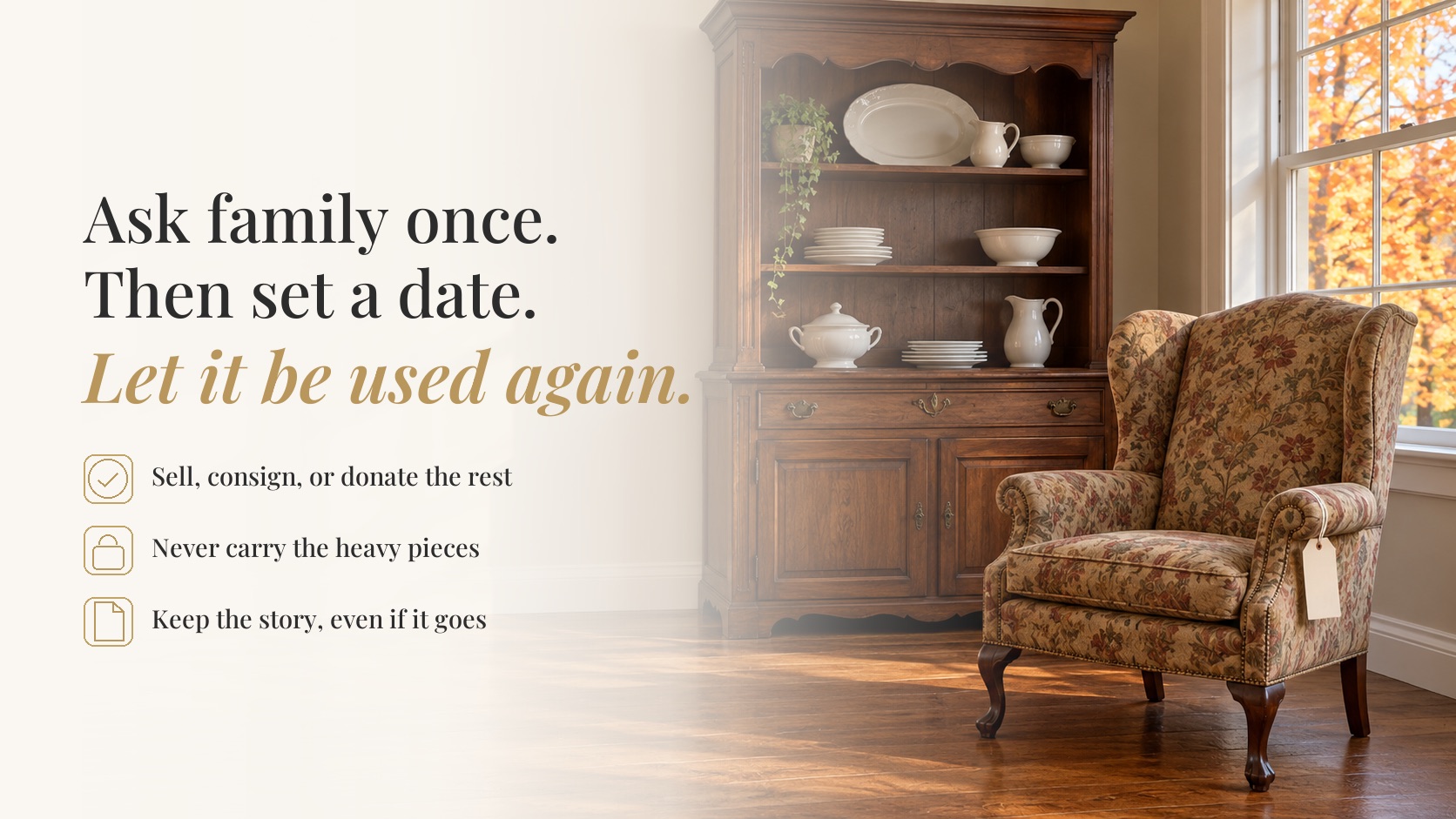
Ask your family once, give them a date, and then let the pieces go where they will be used: sold, consigned, donated, or passed to a friend. Keep the story, even when the furniture goes.
I am Delia Bayna, a REALTOR with eXp Realty in Salt Lake City, Utah, and a Seniors Real Estate Specialist (SRES). Furniture comes up in almost every downsizing conversation I have, and here is how I help people think it through.
Why It Stings When They Say No
You bought the dining table for holiday dinners. The hutch held the good dishes for thirty years. When your son says he has no room for it, it can feel like he is saying no to all of that.
Usually he is saying something smaller. Many adult children live in homes with less space, and some already own their own furniture. Their "no" is about their living room, not about you or the years around that table.
It still hurts, and that is okay. Give yourself a minute with it. Then you can make a plan for the piece that respects what it meant.
Ask Once, Then Set a Date
Before anything leaves the house, ask each of your children, and anyone else in the family, what they would like. Ask once, in writing if your family is spread out. A short list with a photo of each piece works well.
Give everyone a date to answer and a date to pick things up. Without dates, furniture sits in your garage for a year "until we have a truck." With dates, everyone knows where they stand.
If two people want the same piece, decide how you will settle it before it comes up. Some families take turns choosing. Others draw names. Pick a way that feels fair to you, and say it out loud at the start.
Your Choices for What Is Left
Once family has chosen, the rest has somewhere to go. Here are the usual options:
- Sell it yourself. Online listings work well for pieces in good shape. Have someone with you when buyers come to look.
- Consign it. A consignment shop sells it for you and keeps part of the price.
- Hold an estate sale. An estate sale company prices and sells many things at once, usually near the end of the move.
- Donate it. Many donation centers take furniture in good condition, and some will pick it up.
- Offer it to friends and neighbors. Someone you know may be starting out and need exactly that table.
This is the part most people miss. Many large, well-made pieces, like china hutches and big dining sets, sell for much less today than people expect. That says nothing about their quality. Fewer buyers have room for them. If you think a piece is truly valuable, have a personal property appraiser look at it before you sell it.
Heavy Furniture in Older Utah Homes
In many Salt Lake City homes, the heaviest pieces are in the hardest places. A dresser in the basement went down those stairs years ago, and it has to come back up. Older homes in neighborhoods such as the Avenues and Sugar House can have narrow staircases and tight turns.
Plan the heavy pieces first. If they are going to family nearby, set a Saturday and have them bring help. If they are being donated or sold, ask whether the buyer or the charity will carry them out. Try to get them out before snow and ice make the front steps slick.
Do not carry heavy furniture yourself. A pulled back or a fall on the stairs can turn a planned move into a hard one.
Keep the Story, Not Always the Piece
The table matters because of what happened around it. Before it goes, take a few good photos. Write a short note about where it came from and what it was part of. Put the photos and notes in a folder or a small book for your family.
Your kids may not want the hutch, but most of them will want to know the story of the hutch. That is something you can keep and give at the same time.
If you are still sorting the smaller things, my post on sorting through 40 years of belongings covers where to start.
What I Would Do
Measure your next home first, or picture its size if you do not know it yet. Choose the pieces you love that will fit. Then send your family one list with a date, and plan where everything else will go.
If you are selling, wait on some pieces until after listing photos. A few good pieces can help the house look warm and lived in. I bring in a professional stager where a home will benefit from it, and a stager may want to use some of your furniture. My guide to getting ready for listing photos explains what to clear first.
Once we are working together, I call and email every Friday, whether there is news or not, so you always know what comes next. I taught for eighteen years, and I learned that people remember the stories long after they forget the things. My downsizing page shows how this fits with the sale and your next home. What you keep is your call.
Frequently Asked Questions
What do I do with furniture nobody in my family wants?
Sell it, consign it, donate it, or offer it to friends. An estate sale can handle many pieces at once near the end of a move.
Is my antique furniture worth anything?
Some is, and much of it sells for less than people expect. If you think a piece is valuable, have a personal property appraiser look at it before you sell.
How do I divide furniture fairly among my kids?
Ask everyone once, with a list and a date. Decide ahead of time how you will settle it if two people want the same piece.
Can I get a tax deduction for donating furniture?
Sometimes. It depends on your situation, so ask a CPA before you count on it, and keep a receipt from the charity.
This article is general information and is not tax advice. Talk to a CPA about donations and taxes.