The Home journal
Downsizer Guide · The Move · Salt Lake City
The Move
What Should I Do the First Week in My New Home?
2026-10-30 · Delia Bayna, REALTOR® · eXp Realty, LLC | Luxury · 5 min read
The Short Answer
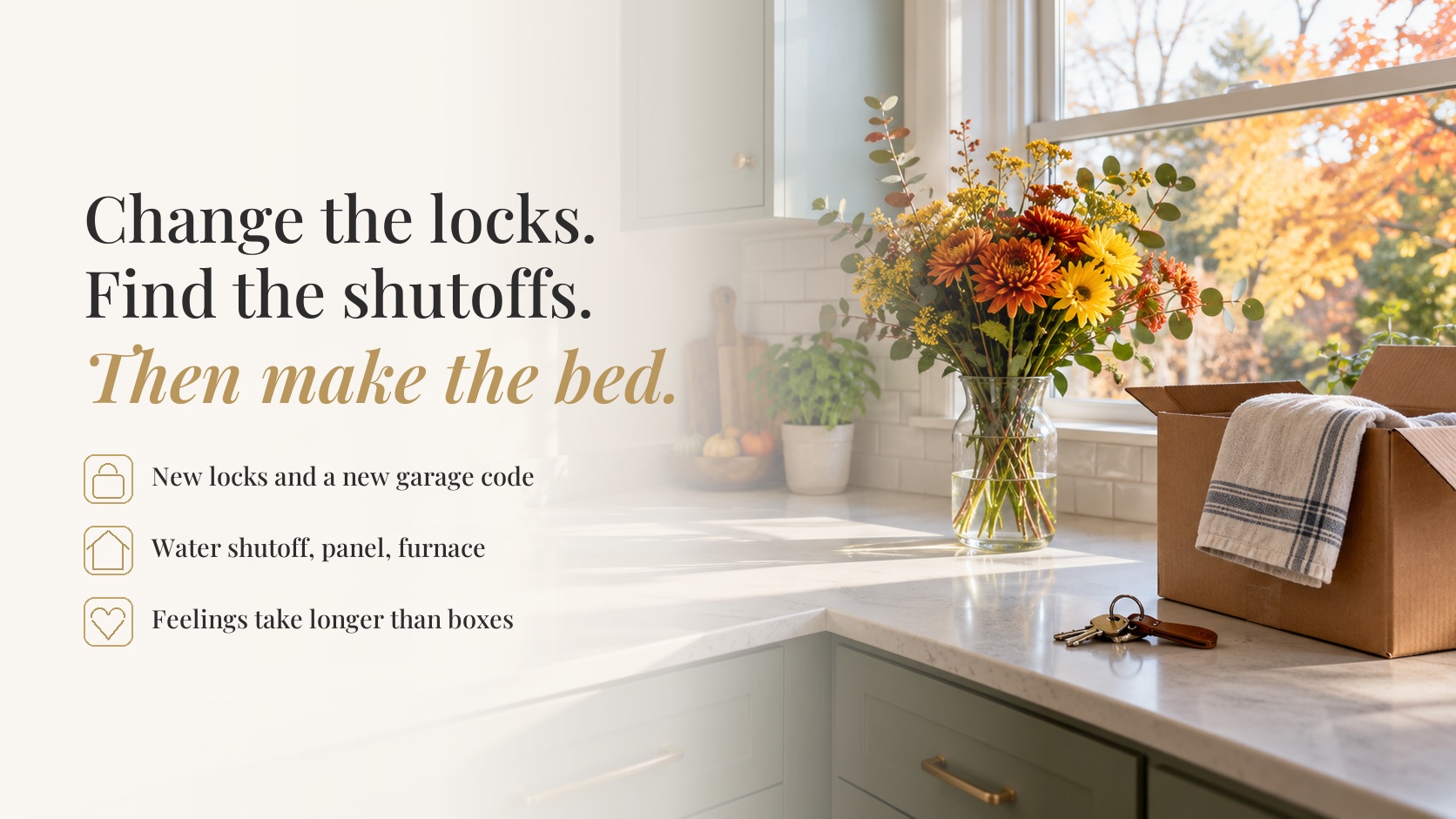
Take care of safety first: change the locks, find the water shutoff and the electrical panel, and make sure the utilities and your mail are in your name. Then unpack the bedroom and kitchen, meet one neighbor, and give your feelings time to catch up.
I am Delia Bayna, a REALTOR with eXp Realty in Salt Lake City, Utah, and a Seniors Real Estate Specialist (SRES). The first week sets the tone for living somewhere new, and here is what I would put at the top of the list.
Day One: Locks and Safety
You do not know how many keys to your new home are out there. Previous owners, their family, a contractor, or a dog walker may still have one. Have a locksmith rekey or change the exterior locks in the first day or two.
Change the garage door code too, and any keypad or smart lock codes. If the home has a security system, set it up in your name with your own code.
Test every smoke detector and carbon monoxide detector. Replace the batteries if you are not sure when they were last changed. If you cannot reach the ceiling safely, ask someone who can. This is not a job for a step stool on moving week.
Find the Shutoffs and the Filter
Walk the house with a flashlight and find three things before you need them: the main water shutoff, the electrical panel, and the furnace. If something leaks at midnight, you want to know where to go.
In a Utah home, the water shutoff is often in the basement or a utility closet. Turn the valve once so you know it moves. At the panel, look for labels on the breakers. If there are none, label them as you learn them.
Check the furnace filter and write down its size. Moving in late fall means the furnace is about to work hard all winter, so a fresh filter is a good first-week job. While you are there, find the water heater. In Utah, water heaters are supposed to be strapped for earthquakes, and it is worth a look to see that yours is.
If the home has a yard, ask whether the sprinklers have been blown out for winter. If you bought a condo or townhome, ask the HOA what it handles, including who clears the snow from your walk. Put a snow shovel and a bag of ice melt by the door before the first storm.
Utilities, Mail, and Your New Address
Make sure power, gas, water, trash, and internet are in your name, starting on the day you moved in. A missed transfer can mean a surprise bill or a cold morning.
Change your address with the post office, online or at the counter. Then work through the places that send you money or bills: your bank, your pension, Social Security, Medicare, your insurance, and your doctors and pharmacy. Update your driver license and voter registration too.
Keep a list as you go. Mail forwarding helps for a while, but it does not last forever, and the list tells you who still needs your new address.
Unpack the Bedroom and Kitchen First
You do not need to unpack everything this week. Unpack the rooms that let you rest and eat.
Make the bed the first night, with your own sheets and pillow. Set up the bathroom and your medications next. Then unpack enough of the kitchen to make simple meals: a pan, a pot, a few plates, and the things you reach for every morning.
Leave the rest for the weeks ahead. A few boxes in the spare room for a month is fine. If you planned a first-night box, which I describe in how to move without wearing yourself out, open it first.
Meet One Neighbor, and Be Patient With Yourself
You do not need to meet the whole street. Meet one person. Wave from the driveway, knock with a plate of cookies, or say hello on a walk. If you have a dog, the dog will probably do the introducing for you. One friendly face nearby makes a new place feel like home sooner.
Then expect some hard days. Grief over the old house often shows up after the boxes are gone and the house is quiet. You may miss a creak in the floor or the view from the old kitchen window. That is normal, and it usually softens with time.
Some people like to drive past the old house. Others would rather not. Either is fine. Fill the new place with a few things that matter to you early on, like a favorite chair or the photos you brought, so it starts to feel like yours.
What I Would Do
Do the locks, the detectors, and the shutoffs in the first two days. Do the address changes and the utilities by the end of the week. Unpack the bedroom and kitchen, and let the rest wait.
I call and email every client every Friday, from the day we start until after closing, whether there is news or not, so you are not left wondering what happens next. I taught for eighteen years, and I still give a plan before I give advice. Settling in goes better with a short list than with a long to-do pile.
If you are still in the early part of this move, start with how to sort through 40 years of belongings, and see how I plan the sale and the next home together on my downsizing page. How fast you settle in is your call.
Frequently Asked Questions
Should I change the locks when I move into a new house?
Yes. You cannot know who still has a key. Rekey or change the exterior locks, and change the garage and keypad codes.
What should I unpack first in a new home?
The bedroom, the bathroom, and enough of the kitchen for simple meals. The rest can wait.
Who do I need to tell about my new address?
The post office, your bank, your pension, Social Security, Medicare, your insurance, your doctors and pharmacy, and the state for your driver license and voter registration.
Is it normal to feel sad after moving out of a longtime home?
Yes. It often shows up after the boxes are unpacked. It usually softens with time, and a few familiar things in the new place help.