The Home journal
Seller Guide · The Decision · Salt Lake City
The Decision
How Do I Know I'm Ready to Sell My House?
2026-10-05 · Delia Bayna, REALTOR® · eXp Realty, LLC | Luxury · 5 min read
The Short Answer
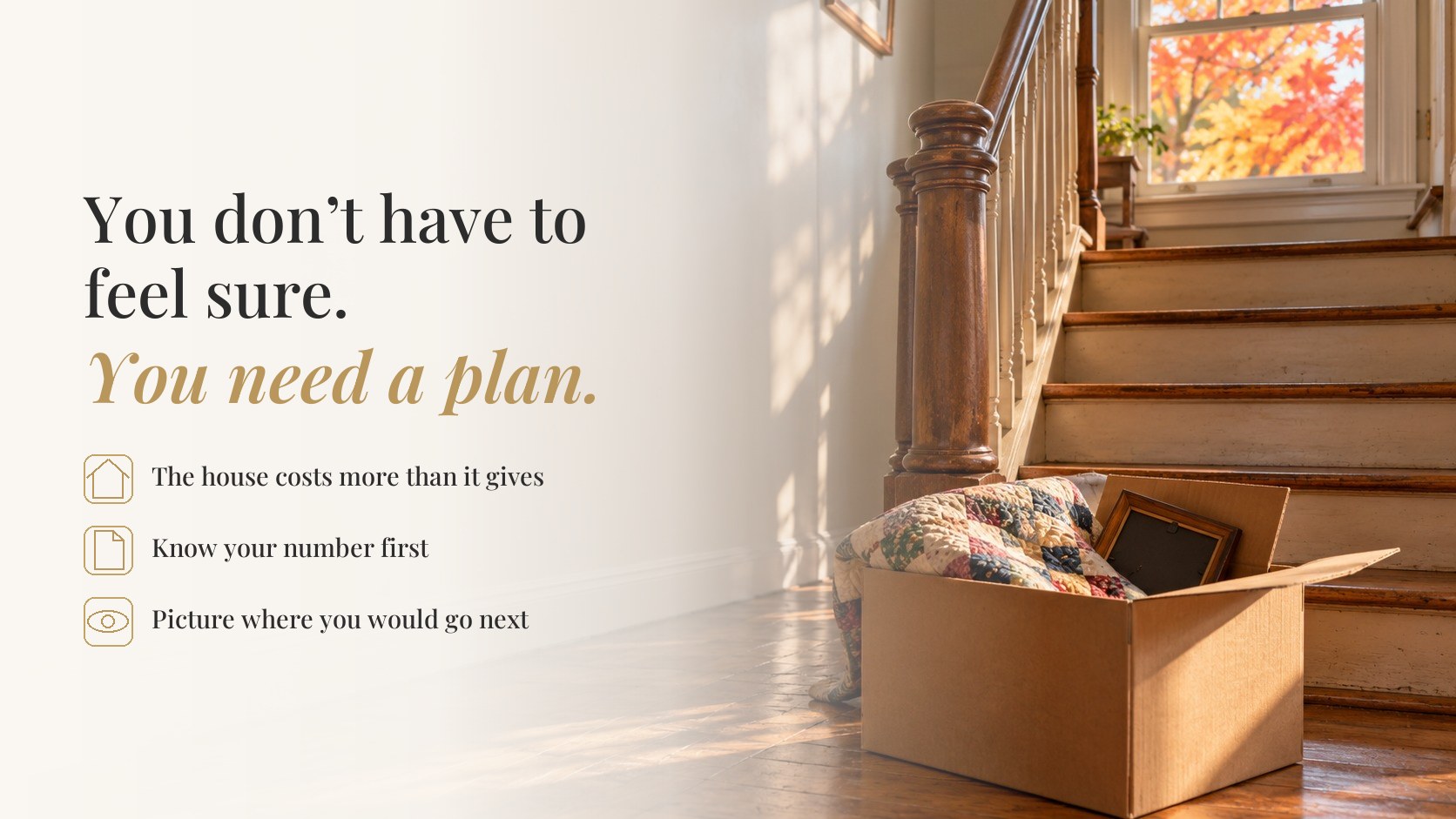
You are ready to sell when the house costs you more than it gives you, in work, in worry, or in money, and you can picture where you would go next. You do not have to feel sure. Most people who sell a longtime home never feel completely sure, and they move anyway, once the plan makes sense.
I am Delia Bayna, a REALTOR with eXp Realty in Salt Lake City, Utah. I am also a Seniors Real Estate Specialist (SRES), and this is a question I hear often from people who have lived in their homes a long time.
Signs the House Has Stopped Fitting
The house usually tells you before you are ready to hear it. Here is what people describe to me:
- You take the stairs slower than you used to, or you have stopped going upstairs at all.
- Rooms stay closed. The bedrooms your kids grew up in hold boxes now.
- The yard went from a hobby to a chore you pay for or worry about.
- Repairs pile up, and each one feels bigger than the last.
- You lie awake thinking about the furnace, the roof, or the gutters.
Utah adds a season to the list. If you dread shoveling the driveway in January, or carrying laundry up and down basement stairs, the house is asking more of you each winter than it did the winter before.
None of these signs mean you have to sell. They mean the question is worth asking.
Ready Does Not Mean Sure
People expect readiness to feel like certainty. For a home you have lived in for twenty or thirty years, it almost never does.
Sellers have said to me, "Every room in here has one of my children in it." They are right. Leaving a house like that is a loss, even when it is the right move. Grief does not mean you are making a mistake. It means the house mattered.
Some people I talk with have been thinking about selling for years. They are not stuck because they cannot make decisions. They are stuck because nobody has handed them the two pieces of information that turn a feeling into a decision.
The Two Things You Need Before You Decide
Your number. Not the price on a website. Your number is the amount you would actually walk away with after the mortgage payoff, the costs of selling, and the move. If your house is paid off or close to it, that number may be bigger than you expect. Either way, you cannot decide well without it. I walk through how to figure it in what will I actually walk away with.
Your next place. You do not need the exact address. You need a picture: a one-level home, a condo near the things you use, a place closer to a son or daughter, or renting for a while. Knowing where you go next is what makes leaving feel possible. If buying and selling at the same time worries you, read how to buy and sell at the same time.
Once people have both, most of them know what they want. A big decision gets smaller when the facts get clearer.
Questions to Ask Yourself
I taught school for eighteen years before I sold real estate. Good questions teach more than good lectures, so here are the ones I would put in front of you:
- If I sold this house, what would I do with the money and the time?
- What do I want my days to look like in five years?
- Which parts of this house do I still use every week?
- What am I most afraid of about moving, and is that fear about the house or about the change?
- If my health changed tomorrow, would this house still work for me?
Write your answers down. You will notice which questions were easy and which ones you wanted to skip. The ones you wanted to skip are usually the important ones.
My downsizing quiz asks four questions like these, if you would like a place to start.
What I Would Do
Get your number first, before you decide anything. A Salt Lake City home value estimate is the place to start, and asking for one does not commit you to selling.
Then give yourself a season. Sort one closet. Look at a few places you might live. Talk it over with the people who matter to you. If the answer keeps coming back yes, you are ready. If it keeps coming back no, that is an answer too, and a good one.
When you do decide, I lay out the whole sale step by step on selling a home in Salt Lake City. If you are moving to something smaller, my downsizing page covers how I sequence the sale and the next home together. It is your call either way, and I will support it.
Frequently Asked Questions
How do I know if I'm ready to sell my house?
When the house costs you more than it gives you in work, worry, or money, and you can picture where you would go next. You do not need to feel certain. You need your number and a plan for your next place.
Is it normal to feel sad about selling a longtime home?
Yes. Selling the house you raised your kids in is a real loss, even when it is the right move. Feeling sad does not mean the decision is wrong.
What should I find out before deciding to sell?
Two things: what you would walk away with after the payoff and selling costs, and where you would live next. With both in front of you, the decision is usually much clearer.
Does getting a home value estimate mean I have to sell?
No. An estimate gives you information. What you do with it is up to you.